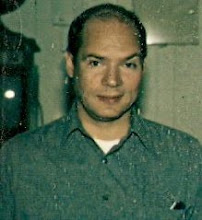
One-on-one interviews with Barry Manilow, conducted by Paul Iorio in person in San Jose on November 8, 2000, and by phone from San Francisco on November 12, 2000, at 10AM.
No one else was present during the conversations (though his publicist did come to collect him in the last two minutes of the San Jose interview.)
The two interviews lasted a few hours and ran for over 7,000 words. This edited transcript is 4,300 words long. Only 215 words of the Q&As have ever been published or publicly released in any form. Ninety-seven percent of it has never been seen or heard by anyone -- until now.
IORIO: ....[Let me] show you [a list of] songs you've recorded. And you could flip through them and tell me what you think.
[I hand him a sheet of paper from an online site listing his songs.]
MANILOW: Where did you get this?
IORIO: From the Internet, an Internet website....It [lists] songs you've recorded.
MANILOW: [looks it over] Oh, my god!
IORIO: What are some of the proud moments, and what are some of the least proud moments?
MANILOW: Well, my favorite is "Could It Be Magic." Never lets me down. That was one of the first. "I'm Your Child" was the very first. "Could It Be Magic" came pretty close afterwards. "All the Time" is a favorite. "One Voice" is a favorite. And then there's all the rest. "Copa[cabana]"'s great.
IORIO: "Mandy" was 25 years ago this year. This is the 25th anniversary of that first, big, major success --
MANILOW: Fuck you!
IORIO: [laughs]
MANILOW: ...for reminding me. [laughs]
IORIO: [laughs]
MANILOW: sorry, sorry...
IORIO: Does that one figure in some way?
MANILOW: "Mandy" is a whole other thing. "Mandy" comes equipped with an emotional memory thing. It's become more than a song. And when I sing it, it's like singing about people and places in the past, this full-bodied memory. Just hearing the intro as I play it, the melody, it's gone beyond a song to me, it's the beginning of a life for me, a life I'd never ever thought about, a life that's continued to this very day. It's so profound right now that I can't even tell you whether I like it or...I can't really analyze it, it's this emotional thing that I love.
IORIO: It's the demarcation line, really, between then and now, isn't it?
MANILOW: It is. And it's so important.
IORIO: What's the first thing that --
[The publicist walks in.]
PUBLICIST: [says Barry has to go!]
MANILOW: [referring to Paul] You're good. He's good.
PUBLICIST: I can tell.
MANILOW: He's a good interviewer. It's a shame that you work for that piece-of-shit [San Francisco] Chronicle! They've been so rotten to me over these last thirty years. They'd love to bury me, but you're working for them, you're a wonderful interviewer. You really did your homework...We should do more of this. I want to give you a longer interview. I very rarely meet interviewers who know what they're talking about.
[This in-person interview in San Jose ends; we agree to continue the interview several days later by phone from San Francisco.]
* * * *
IORIO: ....I'm interested in how [some of your songs] evolved and maybe you could give me a fresh take on each. "One Voice," for example. How did that one evolve?
MANILOW: ...I wrote it in a dream, I didn't write it, I just sort of took dictation. It woke me up; the whole song was all written and I sort of staggered to the cassette machine and croaked it into the cassette machine and went back to sleep -- the whole song, lyric and everything. And then I woke up the next morning and played the cassette back and had no recollection of writing it or anything. I haven't done that with any other song. But I guess "One Voice" needed to be written. Maybe I was going through something at the time. Somehow I don't remember sitting and writing it at all. I played the cassette back and loved it and played it for my friend Linda, who cried and cried, and I thought, it must be working.
IORIO: What happened the night before?
MANILOW: Not very much...I wrote that in the eighties and it still makes a lot of sense -- and maybe even more sense than ever that everybody is everything and everyone is one and if we could all just stop insisting we were separate, maybe everything would calm down, but everyone thinks they're separate. And "One Voice" says [shouts] "you're NOT, you're not separate, you're all together."
IORIO: How about "I Can't Smile Without You"?
MANILOW: Well, [Arista Records president] Clive [Davis] found that song. It was a simple little ditty written by a couple guys in England....I turned it down three times; it was too simple for me and my sophisticated snobby jazz-showtune-classical taste. And Clive said, "You must." I said, "I cannot record a song as simple as this, I just don't know what to do with this." He said, "If you do it right, it's a hit record." As he did with so many others. I've always seen the wisdom in Clive Davis' ears. Because no one spots hits like he does. So, I went to the piano and I said, "How can I make this my own? How can I make this song into something I love?" Because musically and lyrically it's a little nursery rhyme and I can't seem to wrap myself around it. When I found the vaudeville in it, when I found that soft shoe in it, and I love vaudeville, I said, "I got it!"...And from that moment on, I loved it.
IORIO: Now, with "Could It Be Magic" you got together with Adrienne Anderson? How did that develop?
MANILOW: This is one of the first songs that I ever wrote. I took out my Chopin prelude book and lit up a joint -- this was 1972 -- and sat and played my Chopin preludes, and I was in heaven; there is nobody other than Debussy that moves me like Chopin. And I can't play it too well because it's too complicated, but the Chopin prelude in C minor was pretty easy and it was so beautiful. Every musician that hears the first couple of chords of "Could It Be Magic" thinks I wrote it. And of course I didn't....And then I had dinner and came back to the piano and wrote "Could It Be Magic" thinking I had done all this and realized I was just stealing it from Chopin's prelude. I always give the Chopin prelude credit for inspiring the song. But it's a beauty, a beautiful melody, and a beautiful bunch of chord changes. And then I sent the demo on to Adrienne [Anderson] who lived in California at the time and she put a beautiful lyric to it.
IORIO: Ohh. So, the melody came first?
MANILOW: Yeah. Actually, I wrote the whole chorus and she filled in the blanks.
IORIO: "It's a Miracle" is another high-water mark, wouldn't you say?
MANILOW: "It's a Miracle" came from my experience with Bette [Midler]. I was on the road; that was the first time I had ever been on the road as much. But from that moment, I never stopped being on the road. That was the first big road tour I'd ever been on so I wrote, "You wouldn't believe where I've been" [the first line of the song].
IORIO: Did Bette Midler have any kind of input into it?
MANILOW: No.
IORIO: Because that was Marty Panzer.
MANILOW: Right. Marty filled in the blanks again. He used to always -- Because Marty and I grew up together in Brooklyn. We went to high school together. As my career began to explode, he kept using this phrase, "It's a miracle." And I said, "Well, we'll use that for these four notes."
IORIO: And one other: "Looks Like We Made It." What was the moment that crystallized that?
MANILOW: That was another one of Clive's finds, discoveries. "Mandy," "Looks Like We Made It," "Somewhere in the Night" [and down the list] were all...big pop ballads [that Clive Davis found]. Clive would find them, he'd save them in his desk drawer for me. Every time I came up with the next album, he'd present me with a handful of gold. This was one of them.
But again, this one was an easier one. "Looks Like We Made It" was written by Richard Kerr and I love his writing and it was easier for me to find my way into than some of the other ones like "Can't Smile Without You." Because I'm a songwriter, and I don't consider myself a pop singer, it was always difficult for me to sing other people's songs. Because I'd have to make them my own, I'd have to figure out a way to put my own stamp on it...
* * *
IORIO: How about the art and craft of coming up with the song "Copacabana."....What was the very first moment for the song?
MANILOW: Bruce Sussman and I were down in Rio. "I Write the Songs" had just gone number one and I was having my second nervous breakdown. Because being a pop star was not in the cards for me. I really didn't know how to handle it. I'm sure nobody does...Even if you start off your life wanting to do something like that, when it hits, it still knocks you off your feet. And for me, since I had no desire to ever be a performer or a pop singer, all I wanted to ever do was be a musician. After "I Write the Songs," it was just too much to take.
So, I called Bruce and said, "I gotta get out of New York. C'mon." So, he took off from work. And we went down to Brazil, to Rio, and stayed at the Copacabana Palace, and we laid on the Copacabana Beach on Copacabana towels with Copacabana ashtrays and matchbooks.
And Bruce said, "Has there ever been a song called Copacacaba?" And I said, "I don't think there has been." So, when I got back. I was living in L.A. and he was living in New York. And he and his collaborator Jack Feldman called me and said, "What do you want it to be about?" And I said, "Let's make it into a movie and make sure someone gets killed." And they called me back within fifteen minutes with this brilliant lyric.
IORO: They wrote the whole thing in fifteen minutes?
MANILOW: I would say fifteen, twenty minutes. I don't know if you know how difficult it is to write a story song as a lyricist. You name me five story songs that were hit songs and I will be surprised. I can only think of "Ode to Billy Joe" and "Rhinestone Cowboy" and "Copa." They are impossible to write. And these guys are so brilliant as lyricists. They were able to craft three verses and three choruses and a story in three minutes that we still remember 20 years later. That's how brilliant they were....That it became a hit record, I think the melody was catchy, the drum beat was catchy and we made a real --
IORIO: But you didn't know that before. When the album came out, the record company didn't know either.
MANILOW: No, Clive Davis didn't even like it. He thought it was an album cut. He was much more interested in "Can't Smile Without You" and "Even Now" and "Somewhere in the Night" on that "Even Now" album. He wasn't even interested in releasing "Copacabana" but "Copa" forced its way out of that album and became a number one dance record in the Miami dance disco clubs and then little by little it got bigger and bigger and so Arista had to release "Copa" as a single and that meant four singles out of that album "Even Now."
IORIO: Is that how you usually work with...any other collaborators? Do you generally get the lyric and then put the music to it?
MANILOW: It's all different. What we get first is the idea. That's the way I like to work. And then the rest is fun. The bloodletting is getting the idea. That's why writing pop songs is so difficult and that's why I admire these people who can write pop song after pop song, like, of course, Diane Warren or David Foster or Carol Bayer Sager, these people who start with a blank page and don't have a situation or character to write for, they just have a page as blank as can be.
Because what you're trying to write is a catchy melody and a memorable lyric for the radio and I tell you I don't know how they do it over and over and over again. That is hardest thing I can imagine doing is to write a pop song without it coming from someplace -- and they do it.
So, the hard part for us is always in, What is the idea? Usually when Bruce and I write, our idea is much too sophisticated for pop radio. And so we have to keep thinking about how much simpler can we get it and not have it turn into thin air. Somehow these pop writers know how to do that. It's always very difficult for Bruce and I to do that.
IORIO: Are there instances where you'll come up with the lyrics?
MANILOW: I've done some lyrics. I did a song called "One Voice" and I did a song called "If I Should Love Again." They're nice, but I don't fancy myself a lyricist. Although I'm getting more and more comfortable with it. But it's Bruce and Marty Panzer my old buddy Marty Panzer who wrote "Even Now," "It's a Miracle" and This One's For You" and "All the Time." And Adrienne Anderson who wrote "Could It Be Magic," and "Daybreak." These people are lyricists. They really are poets, they have a handle on how to phrase a sentence that I just don't. Mine's kind of clunky. But I do respect that talent.
IORIO: Do you sometimes come up with a melody and then say, I really want a song about, I don't know, a love triangle or something? Does a melody suggest a theme to you and then you give it to a lyricist?
MANILOW: I did that a couple of times....First, I write on demand. I'm not one of those guys who has a great idea and writes it down and puts it in a trunk and hopes it'll find a place. Because the few times I've done that, it just lays in the trunk. And I don't like to do that. So, usually I have an album or something it's going to be on. And when that happens, I usually call Bruce, Marty, Adrienne, Carole Bayer Sager and say: "I've got this jazz album I'm doing. And what I need for this jazz album is a ballad that could fit in a smoky jazz club at two in the morning. So, see what you come up with." So, they'll call me back and say, "How do you like the title 'When Love is Gone'?" I say, "Gee I like it. I'll call you back." I play it: [sings] "when love is gone do do do do." I call them back and say, "What do you think of that?" "Good!" "I'll give you the rest of it." And little by little we pile it on together.
IORIO: Have you ever disagreed with a lyricist about a lyric?
MANILOW: Uh, yeah.
IORIO: Is there one prominent example?
MANILOW: I gave back Marty [Panzer's] "Through the Years." [laughs] And so he went to Steve Dorff -- I think it was Steve Dorff who wrote the melody. And I was wrong; it was a gorgeous song. I couldn't hear the melody. And the lyrics seemed too sentimental to me, every time I wrote a melody to his "Through the Years" it just felt too sentimental to me. So I gave it back to him and the next year Kenny Rogers had this huge hit.
IORIO: Are there [some songs of yours] you wish you could revise?
MANILOW: No, no, no. They're great. I'm very proud of the catalog, whether I've written them or not. Clive found half of my hit songs that I've had. And I turned them all down. I fought with him on every single one of them. But you can't say no to Clive.
* * *
IORIO: What about fame itself. Is that something you could do without?
MANILOW: Oh, boy, yes. I think everybody would tell you that. Oh, boy, yes. And for me, a guy who never wanted fame. My assistant Marco, who I think you met, worked for Andy Gibb. And Andy used to enjoy standing on a corner signing autographs. He would actually stand on a corner hoping that people would go up to him and ask for an autograph. I never enjoyed that part of it. The fame part has always been quite an albatross around my musical neck.
IORIO: How about the early rush of success?
MANILOW: It wasn't exciting. No, I take that back. It was exciting but it was more confusing and scary than pleasant. I look back on those days and I see a very confused young guy. I say a little prayer for the young people coming up, hoping they don't get knocked off their feet, because I nearly did get knocked off my feet. I became quite a brat. Not for long. But that fame thing can really hurt.
IORIO: What kinds of things happened as a result? Trying to go about your everyday business today and back then....What kinds of things occur that make it exciting or kind of a nightmare?
MANILOW: These days it's fine. I really don't mind it much. It's not as insane as it was when I began. After about twenty or thirty years in the public eye, you're always aware of people staring at you. When you walk out to the street or a restaurant. It doesn't throw me as much as it used to. I mean, who really wants to be stared at? That's not a very comfortable position. But I've kind of gotten used to it. In the beginning it was very chaotic. It's not chaotic anymore...
* * *
IORIO: You clearly have a love for great songwriting of all eras -- and why don't I play a game: I'll name a songwriter and you tell me what you think of them and what your favorite song of theirs is. Harold Arlen.
MANILOW: [laughs] I knew you were going to start with him.
IORIO: OK. [laughs]
MANILOW: There are just too many [songs of his]. I just finished reading his biography. The first song he'd ever written was "Get Happy." And someone discovered it because it was a riff to an introduction to a dance arrangement that he was hired to play. And he played da da da da da instead of dadadadad. And somebody said, "What is that?" And he said, "I'm just making it up." And he put it together with Ted Koehler and came up with "Get Happy." So what's my favorite Harold Arlen song? I would go for the ones people don't know like "I Wonder What Became of Me" or "A Sleeping Bee" or "I Don't Like Goodbyes" or "Paris is a Lonely Town." He was as good as Gershwin in his own way, I thought. Of course, there's "Over the Rainbow" and the famous ones...
IORIO: What about Elton John/Bernie Taupin?
MANILOW: Elton John...is a genius. There is only one Elton John. But I think all of us are condemned to always hearing, "I like his earlier work best." Nothing like "Daniel," "Take Me to the Pilot." The first few Elton John albums happened before I even thought of singing or writing -- I was still doing arrangements for other people -- and Elton came out and blew everybody away, me included.
IORIO: Sammy Cahn?
MANILOW: I've done a couple of Sammy Cahns on the Sinatra album that I just did [there are five Cahns on "Manilow Sings Sinatra" (1998)]. I was really very impressed with his lyric writing. It seemed so effortless, so easy, so simple. But when I started to sing these songs, I mean, "All the Way" is such a beauty. It's about commitment. I never heard it until I actually sang it. I guess "All the Way" would be my favorite.
IORIO: Bob Dylan.
MANILOW: [pause] Well, I've never really been a Bob Dylan fan, I'm afraid. "Mr. Tambourine Man," maybe? "I Shall Be Released," maybe? "Like a Rolling Stone"? I guess those would be my favorites. And then I couldn't understand a word he said. The last ten years, I couldn't understand what he's saying. But the earlier ones were great.
IORIO: Jimmy Van Heusen?
MANILOW: His melodies were just wshhhhh. I guess "Imagination"?... I'll say "Imagination."
IORIO: And finally, John Lennon and Paul McCartney.
MANILOW: Everything. They really rocked my world, they rocked everybody's world. That's when I was on the fan side. Everyone was, "What is all this rock 'n' roll shit?!" Because I was still a jazz snob in the sixties. And I had one foot in the past and one foot dangling in the present. But I couldn't figure out what I liked about the present in the sixties, because they weren't really turning me on. I liked the energy and I liked the anger of the rock 'n' roll writers of the sixties, but the craft of songwriting was kind of eluding them. And then here came Lennon and McCartney and I said, "Oooo what's this?"....There's not one song that they've ever written that I don't like. Even up to this day, Paul McCartney is still a fantastic songwriter.
IORIO: ....Have you ever worked with George Martin?
MANILOW: No, I'd kill to work with George Martin. But I think he's probably retiring now.
IORIO: In reading your bio, I found that you grew up in Williamsburg [Brooklyn] back when it was pretty tough.
MANILOW: Right.
IORIO: And yet your music is not like your upbringing. If you didn't know your bio, you would think that you grew up in Westchester or some [affluent] place like that.
MANILOW: No, definitely not.
IORIO: How is it that that that...hardscrabble background doesn't seem to come through. doesn't seem to have affected your songwriting?...Was it a formative influence on your songwriting and musical taste?
MANILOW: I think it's because I had a safe harbor in the middle of the slums of Williamsburg. My family gave me a beautiful sense of security and safety; it was a very loving family. They were as fucked up as anybody else's family, but they loved me. When a child is loved, and the kid really feels he is loved, you can just do anything. You're not afraid to fail. I mean, I've failed many times but I've never felt like a failure. Because somehow my family told me I was fine. So I had a safe harbor in the slums of Williamsburg...and that's what comes out. Not as rebellious or angry as someone else who might have been in that situation.
I think the danger of living in a rough neighborhood probably propelled me to get out of there. Probably was a good thing for me. Probably encouraged me to make my way out of this very dark, dangerous place. But when I came home every night, it felt safe.
* * *
IORIO: What are you working on now and what's your next project?
MANILOW: Well, the next project is "Harmony."....We did it in La Jolla and we broke all the records over there and it got them out of debt as a matter of act. That's how successful it was. We got beautiful reviews...We've been having trouble with the producers and the theaters. Mounting a ten million dollar musical is not an easy thing. I think we're going up in July [2000] in the middle of the country and then coming into New York in the beginning of next year...
IORIO: What got you interested in "Harmony"?...
MANILOW: What got me interested, and what got Bruce [Sussman] interested, is we heard this group [the Comedian Harmonists, a German singing group of the pre-war period that was banned by the Nazis]. He saw this documentary on their lives. It was a very compelling story. He called me from a phone booth in New York and said, "I think I found a very interesting story." Six musicians who just wanted to make music -- like my band! -- and they weren't allowed to do that because of something that was ridiculous [antisemitism]. Like saying, "We're going to kill you because you're blond." This anti-Jewish thing. Then it was terrifying and horrible. And the Nazis broke up the group -- and the rest of the horror that followed.
The story itself was compelling to us but what really threw me over the edge was when I actually heard what they had musically done. Musically they were the Manhattan Transfer, musically they were the jazz group of my dreams in the 1930s, and comedically they were like the Marx Brothers, they were so wild....When I heard their CDs -- they've unearthed a lot of their 78 records from the thirties, so I got the greatest hits of the Comedian Harmonists. And they were unbelievably talented and innovative and I said, "Nobody knows these guys." They were the innovators; they were the beginnings of the Hi-Lo's and Take 6 and the Modernaires. These were the guys that started it all and we'd never heard of them.
* * *
IORIO: Do you consider yourself more of a songwriter than a singer?
MANILOW: These days I think it's a little bit of both. I've been fortunate enough to have success in all of these facets of the music business that I ever wanted to....This performing thing is still an awesome experience for me, that people are still interested in seeing me perform. I've never gotten quite friendly with that. And I can't figure out what they're seeing. But I'm so grateful for it.